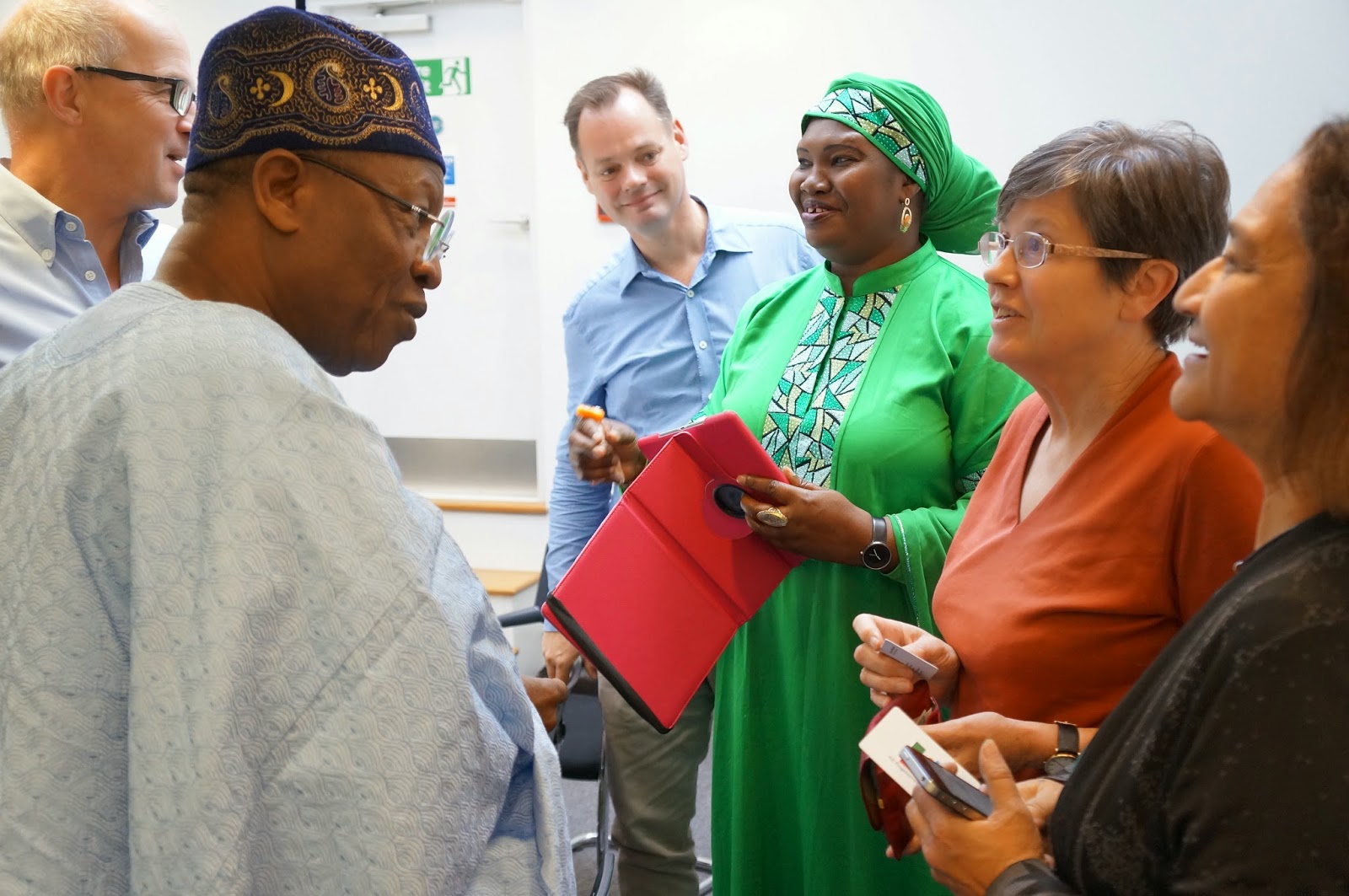
FPA members visited Brussels from January 21 – January 23 for a series of briefings by senior officials at the European Commission, European Parliament, and Council of the European Union. They heard from - among others - Margaritis Schinas, Chief Spokesperson for the Commission; Jean Lambert, British Green MEP; and Fabian Zuleeg from the European Policy Centre think tank. The visit was hosted by the European Journalism Centre.
Monday, 26 January 2015
FPA visit to Brussels
FPA members visited Brussels from January 21 – January 23 for a series of briefings by senior officials at the European Commission, European Parliament, and Council of the European Union. They heard from - among others - Margaritis Schinas, Chief Spokesperson for the Commission; Jean Lambert, British Green MEP; and Fabian Zuleeg from the European Policy Centre think tank. The visit was hosted by the European Journalism Centre.
Tuesday, 20 January 2015
Withdrawal from the European Human Rights Convention: the case for and against
Philippe Sands QC and Martin Howe
QC, both members of the Government’s 2012 Commission on a Bill of Rights,
briefed FPA members on their strongly opposing views on the issue of a possible
withdrawal by a future Conservative government from the European Convention on
Human Rights (ECHR).
In Martin Howe’s view, the central
problem is that the European Court of Human Rights in Strasbourg has developed
its interpretation of the ECHR in directions contrary to the original
intention.
Philippe Sands believed that a
country couldn’t be a member of the European Union and withdraw from the
European Convention of Human Rights at the same time, and membership of the EU
was what the Conservative plans were really about. There was also a real danger
that withdrawal from the ECHR would undermine the Good Friday Agreement in
Northern Ireland.
Monday, 24 November 2014
Whistleblowers: we need the protection of public interest defence
Former employees of GCHQ, the NSA, FBI and US State Department told a briefing at the FPA that both the Blair government in the UK and Obama administration in the USA had talked about protection in law for whistleblowers, but nothing had yet been agreed. The whistleblowers were brought to London by ExposeFacts, a new Washington based campaign aimed at providing better protection for whistleblowers and to protect journalism from surveillance.Coleen Rowley, a former FBI lawyer, said the 9/11 attacks might well have been prevented had national agencies shared information with each other and - crucially - with the public. It was simply not true to think that secrecy provided protection; the exact opposite was true. Kirk Wiebe, who worked at the NSA for 36 years, said the NSA had been acting illegally for 60% of its existence; mass surveillance was the most insidious threat to global democracy. It was Goebbels who had said " If you have nothing to hide, you have nothing to fear"; and we all know how that ended.
Tuesday, 18 November 2014
Human Rights in Bahrain: “we must learn from our mistakes”
The recently appointed Ombudsman for the Ministry of
Interior in Bahrain told an FPA briefing that his country had to be
transparent, address the issue of human rights inside prisons, and learn from
past mistakes. Nawaf Al Moawda said they were taking advice from, among others,
the UK’s Independent Police Complaints Commission and Her Majesty’s Inspector
of Prisons. The main challenge
they faced in Bahrain was to build public confidence; the number of complaints
was rising, which he felt showed that such confidence was growing. Mr Al
Moawda, who is also authorised to visit prisons “to ascertain the legality of
procedures and that inmates, prisoners and detainees were not subjected to
torture or inhuman or derogatory treatment”, said he had welcomed Amnesty
International to Bahrain, and was now awaiting their
report. A recent case of a prisoner being beaten to death had resulted in the
arrest and charging of a police officer. He said his staff had now grown to a
team of fifty, and he was not aware of any similar system being adopted in any
other Arab country.
Friday, 3 October 2014
Nigerian Opposition briefs the FPA
'President Goodluck Jonathan is exploiting Boko Haram insurgency in Nigeria for political ends' – Opposition spokesman
Nigeria’s ruling party wants to profit from Boko Haram,
according to the chief spokesman for the All Progressives Congress (APC), which
is aiming to win the general election in Nigeria on February 14th
next year.
Lai Mohammed told FPA members that the longer the insurgency goes
on, the easier it will be for the Government to suspend the elections in
affected areas, disenfranchising about 5 million supporters of the APC.
The stage was set for a major political
upset - but that depended on the election being free and fair. Mr Mohammed said a request has already been made for EU observers to monitor the poll. He said the APC wanted to revamp the Nigerian economy; the top issue was unemployment
and jobs, followed by corruption and then security. Poverty, driven by endemic
corruption, and not religion was at the heart of
Nigeria’s current problems. A future APC Government would negotiate Boko Haram
out of existence as a prudent and focused Government; the alternative was
continuing corruption, poor governance and poverty.
Thursday, 2 October 2014
An evening with investigative journalist, Nick Davies.
A lively and fascinating evening on October 1 as Nick Davies shared the gripping story of the six year investigation which would eventually unearth the endemic culture of criminality and corruption that existed inside Rupert Murdoch’s News International.
His talk elicited lively questions and robust discussion about the future of journalism and revealed a widespread enthusiasm from correspondents representing myriad nations to forge new ways to maintain great investigative traditions and reporting.
Davies' book, 'Hack Attack: How the Truth Caught Up with Rupert Murdoch' draws on exclusive interviews with private investigators, journalists, police officers and Murdoch executives and is a not-to-be-missed dissection of the way politics, police and media colluded to abuse their powers in 21st century Britain.
Davies' spoke about his journalistic methods, the ethical conundrums he and The Guardian faced as they took on the world's most powerful media mogul, the continuing need for well resourced, incisive investigative work - and admitted a couple of regrets, including the shock closure of News of the World and the loss of so many reporting jobs.
.
Subscribe to:
Posts (Atom)